What do status symbols look like now, and how have they changed?
The decline of the luxury industry’s status as a status symbol. Digital media has fueled a cultural oversaturation of products, even if they were physically scarce. It’s too easy to go online and spot a million pictures of Birkins, Kellys, and Lamborghinis. The luxury product loses its mystique. It doesn’t matter how much it costs, it’s going to be received as basic. This sentiment has been exacerbated by dupe culture.
Even “slow luxe” brands like Brunello Cucinelli and Loro Piana have been appropriated via the old money aesthetic where we learned that actually, your culture IS my costume.
Over the past 10 years, it’s actually been the beauty industry as the key status symbol: having great skin, teeth, hair, cheekbones, etc. But now, that’s been eroded by the democratization of skincare, cosmetic procedures, and now even weight loss medication. That means we’re getting closer and closer to looking just like the people we aspired to be while also, conversely, starting to look exactly the same. In an oversaturated image culture, the new status symbols can’t just be things that are compressed into the visual realm. They’ve got to be behavioral.
6 Post-Luxury Behavioral Status Symbols

Connected Privacy
What we’ve witnessed in the past 10 years is the gradual degradation of the internet from our great white hope for society to the thing that we believe might just doom us all. Everywhere we look, our online spaces have become increasingly hostile, and now we can treat the internet as just something that we have to be on because it keeps us connected to our friends, helps us advance our careers, and makes sure that we are consuming products that society deems cool Meanwhile, big tech has transformed you into a product. A blood bank where most people are consigned to having their attention and their entire lives harvested for data to feed some endless algorithmic Sarlacc pit.
In this culture of overexposure, the greatest privilege is to be invisible. This is why privacy is a core pillar of Apple’s luxury brand positioning. because luxury is built out of the statement that “you are safe. You won’t be tracked. You won’t be harvested. You are not the product.” The status piece comes from how you can stay as offline as possible while still remaining connected. Without an active social media presence or an algorithm feeding you recommendations, can you still know the cool places to eat, the right places to shop, and the right brands to wear?
It shows you have a genuine proximity to influence. Being somehow constantly present in these spaces means that content is still being captured of you and that you still “exist” online, but others are managing your presence for you.

Wasteful Time
The ability to sit around with friends, wasting time, has become a status symbol.
Since the 2010s, we’ve been living in a culture where self-optimization was aspirational. 5:00am gym girlies, the 5:00am wakeup club, cold plunge, journal, barre, pilates, grinding. These were all considered high-status activities. What we’re seeing emerge now is a new, aspirational leisure class. People whose value isn’t tied to what they do, but how effortlessly they exist.
This comes from cost of living pressures because in a culture where people are having to prioritize to the extreme just to keep up, what is a real luxury is to be able to go post-optimization and say, “Hey, I’m enough as I am.” This includes people whose ability to earn a living is directly tied to their ability to sell that vibe, that ease. This is why they always have vague job titles like creative director. They’re selling their perspective, not a product.
Time itself has become such a precious commodity, so the ultimate luxury is to be wasteful with it. To have complete autonomy over your schedule so you can work from anywhere and meet anyone whenever. To say no to opportunities on the basis of values or bad vibes. Or just to partake in long, leisurely meals or activities with no rushed ending. This is the new aspiration. The ability to live not through achieving but just curating, existing.
Take this as your sign to go out and have wine with your friends this weekend. Be intentional with your frivolity.
Having Children
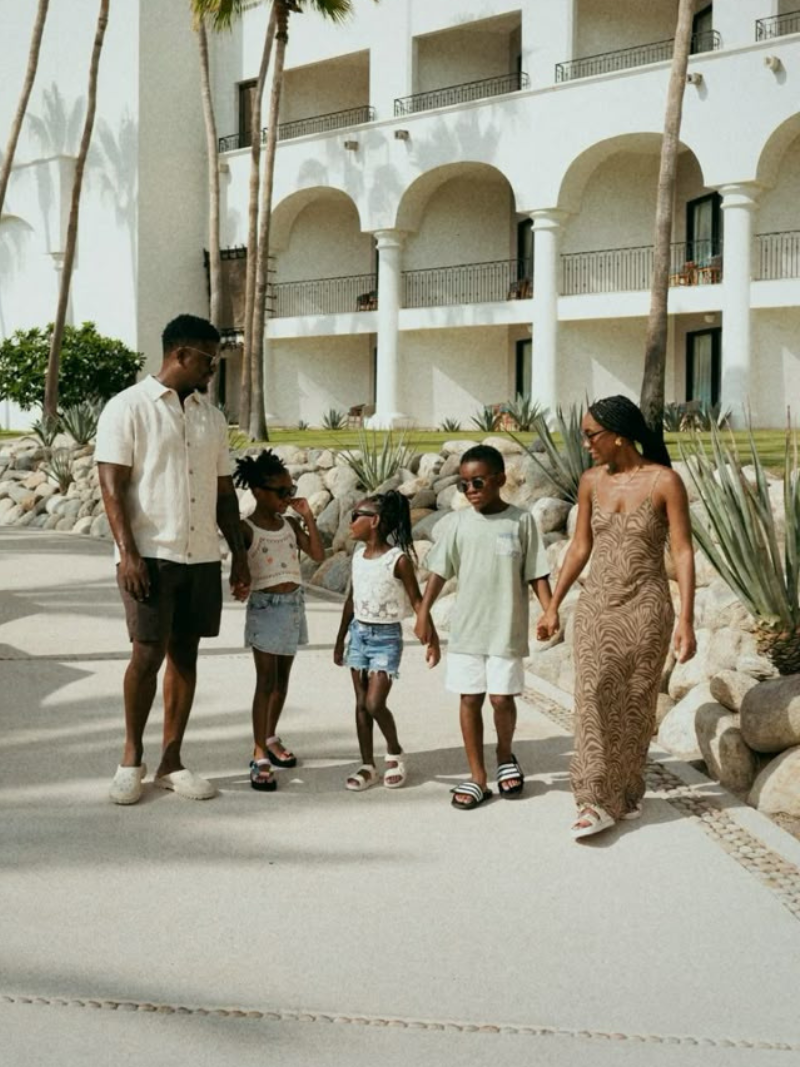
The idea of a big family being low status is derived from a time that no longer exists where you would have 12 kids, 3 die, and 5 go work on the farm. Now it’s the opposite, in some ways having a big family is the ultimate status symbol. Of course, there are economic factors at play. The rising cost of living means you need to have significant financial stability just to live comfortably with children. You have to have active support systems in family or paid childcare, or that you’ve accumulated enough career capital to take parental leave without getting screwed by it.
It’s also a flex to have children because it’s a signal that you have confidence in the future despite the world around you being…not the best. But just like with having privacy, it’s about how you have kids. To what extent can you maintain your pre-parenthood lifestyle while still meeting friends, still showing up at the club or events, not being tired all the time, and not constantly wearing clothes that have a little bit of puke on them?
This goes back to the idea of time being a status symbol. Are you able to take time for active parenting rather than just having to outsource everything?

Niche Expertise
The coolest people in our society right now are the ones who are the most deeply obsessed with their hobbies and passions.
AI is likely going to usher in the era of the hypergeneralist with the way it’s democratized access to information. It’s never been easier to know a little bit about a lot of things. Soon, everyone’s expertise is going to look a lot like the movie Holes, shallow puddles as far as the eye can see. Six feet deep, six feet wide. But when everyone and everything is going broad, status will come from the ability to go deep.
The coolest people in this era will be those who know a lot about a little and have an almost singular dedication to the pursuit of hyper-specific topics. It doesn’t matter if it’s the wines of Paso Robles or beekeeping, your ability to lock in amongst a world of distraction and clutter communicates that you are a person of purpose and clarity.
Creating Community
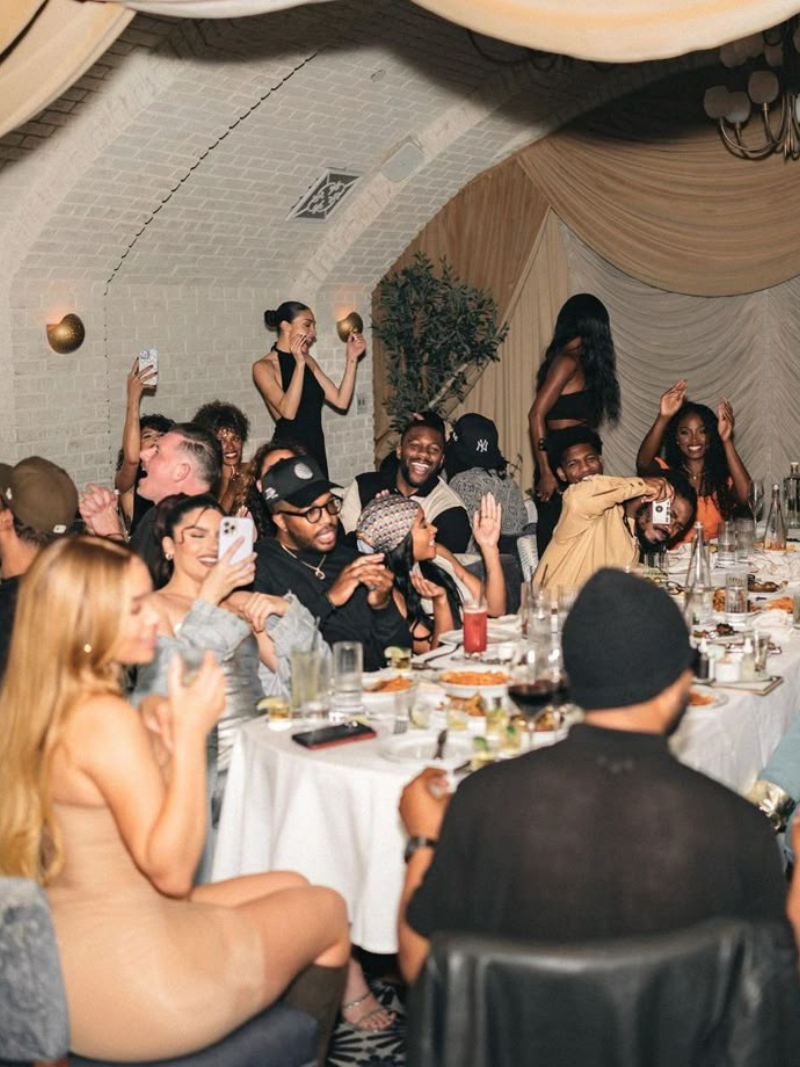
If you know how to host a great dinner party, you’re probably one of the coolest people in your group.
I saw a video about why there is an oversupply of DJs in London. In it, the person laid down a thesis about why people don’t feel like they have the right to exist in spaces anymore. They need to feel like they are a producer of culture rather than just a passive consumer, and DJs are uniquely positioned as either a hobby or profession because your production is formed in direct discourse with your audience.
You can start to see that this phenomenon isn’t just confined to DJs. Depending on your age and demographic, you’ll see anything from Instagram chefs to craft cocktail makers running around with all of the cultural clout. This is a reflection of the fact that, as a discourse, the chef or home mixologist is able to curate a more private atmosphere that facilitates better connection because the dinner table or living room is a better place for deep conversation than a dance floor or bar. But regardless of whether it’s chefs or DJs, the ability to be someone who can create real community has become a really powerful status symbol.
The coolest people are the best hosts. They know how to select the right mix of people and personalities for a certain event; what kind of activities, games, and conversations are right for that event; and how to build an atmosphere that allows people to walk in, drop their guard, and authentically connect. In an era where community is so sorely lacking, with only 4% of Americans hanging out on an average weekend, there is no greater luxury than to spend your Saturday night with a great group of friends, with great food and great conversation.

Quality Sleep
The ability to consistently get 8 hours of great sleep has become a status symbol. Time has become such a precious commodity that the ultimate luxury is to be wasteful with it. This extends beyond the waking world. I’ve seen a narrative form where sleep is treated as a luxury. In a culture where sleep is treated as something to be sacrificed in pursuit of your goals–see the “grindset” and “you can sleep when you’re dead” mentalities–or a world where technology invades every aspect of our lives, chipping away at our sleep as we doom scroll into the night, it becomes a status symbol to push back against those pressures and reappropriate what others had stolen from them.
I think this is also why we’re seeing the emergence of anti-caffeine and sobriety movements. It’s not just about the detrimental health effects of caffeine or alcohol. Coffee and alcohol are the takeoff and landing equipment our society requires us to function at the unnatural pace expected of us. To opt out of this is a statement of status because you are well-rested and relaxed enough to participate in life without cushioning.
As with everything else listed here, it’s not just the amount of sleep, but it’s the quality of sleep and how you’re getting it. There has been a boom in industries promising “natural sleep,” with everything from fitness wearables to functional food. All of these factors ladder up to a meta-narrative of good sleep as a tool for high performance.
Luxury has always been about escapism, but with the state of society as it is right now, a growing part of that narrative is, “What other pressures can you help me to resist?”
You’ll Probably Like My Newsletter!
Every issue is written the same way this post was — with a real opinion and something worth your time. I cover beauty, style, self-improvement, and the occasional thing I can’t stop thinking about.
You can always unsubscribe, but most people don’t.