The smell of a freshly cleaned pool often signals summer and fun. Yet that same scent, caused by chlorine and other pool chemicals, can hide potential health risks. While these disinfectants keep bacteria at bay, prolonged or improper exposure can irritate and even harm the respiratory system.
What Happens When Chlorine Meets Air
Chlorine is essential for keeping pool water safe, but it is also reactive. When it combines with sweat, urine, or body oils, it forms compounds called chloramines. These gases hover above the water’s surface and are often mistaken for the “clean pool” smell. Chloramines irritate the eyes, throat, and lungs, especially in poorly ventilated indoor pools. Repeated exposure can inflame the airways, leading to coughing, wheezing, or shortness of breath.
For swimmers with asthma or allergies, chloramine exposure can worsen symptoms. Research has found that children and competitive swimmers who spend hours in chlorinated pools are more likely to experience airway sensitivity. Even non-swimmers sitting poolside can be affected, as the gases easily spread into the surrounding air.
The Cumulative Impact of Chemical Exposure
Pool maintenance often involves handling concentrated chemicals such as chlorine tablets, muriatic acid, and algaecides. Without proper ventilation or protective gear, these substances release fumes that can irritate or burn the respiratory lining. Over time, chronic low-level exposure has been linked to lung inflammation and increased risk of conditions like reactive airways dysfunction syndrome (RADS).
Home pool owners should be especially careful with chemical storage and mixing. Storing chemicals in humid or enclosed areas can cause them to react and release toxic vapors. Using high-quality plumbing components, such as Schedule 40 PVC elbows, helps ensure that chemical handling systems remain sealed and stable, reducing the chance of leaks or accidental exposure.
Creating Safer Pool Environments
Reducing risk starts with awareness. Regularly checking pool ventilation systems, maintaining proper chlorine balance, and showering before swimming can all reduce chloramine formation. Outdoor swimming areas are safer for the lungs, but if using an indoor pool, it is best to choose one with visible ventilation ducts or open windows.
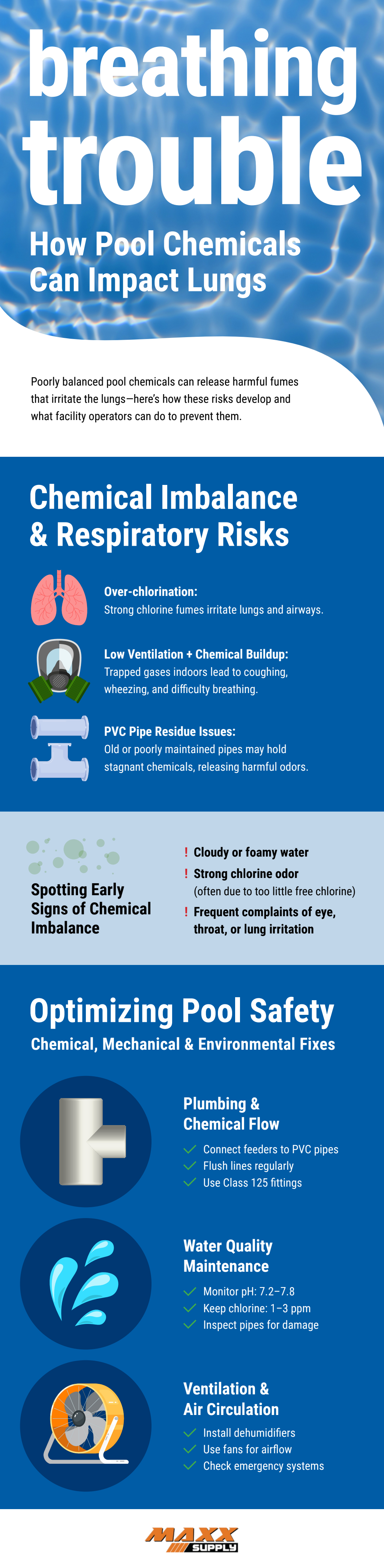
Pool safety extends beyond preventing slips and falls. It also means caring for the air we breathe while enjoying the water. Understanding how pool chemicals behave allows us to take small, preventive steps that protect respiratory health without sacrificing cleanliness or comfort. Check out the infographic below to learn more.